Home / Structural Drying
STRUCTURAL DRYING • CHESTERFIELD, MISSOURI
Thorough Structural Drying in Chesterfield, MO
The water you can see is the easy part. We provide structural drying in Chesterfield, MO for the moisture left inside walls, floors, ceilings and framing after a leak or flood, using commercial dehumidifiers, air movers and daily moisture readings. Call and a drying crew is dispatched immediately.
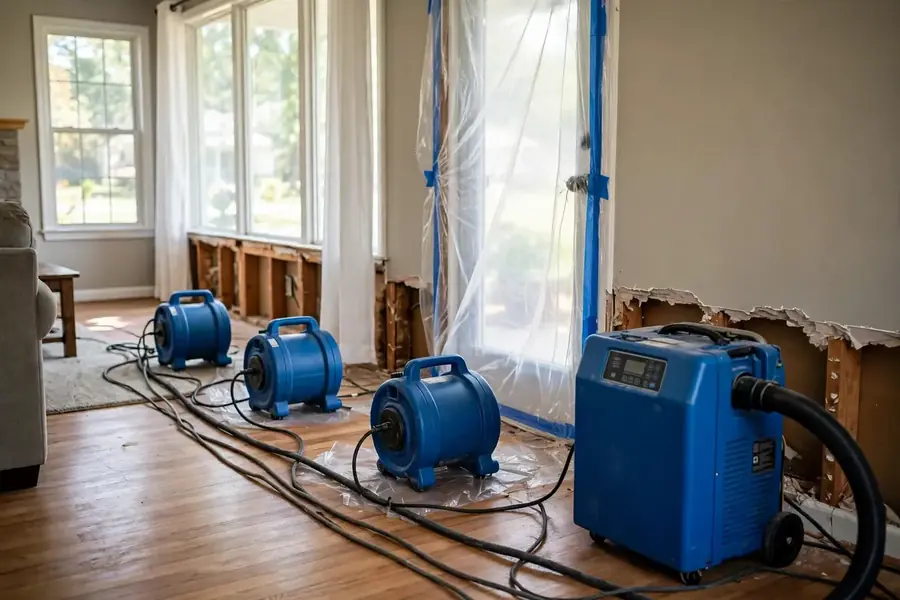
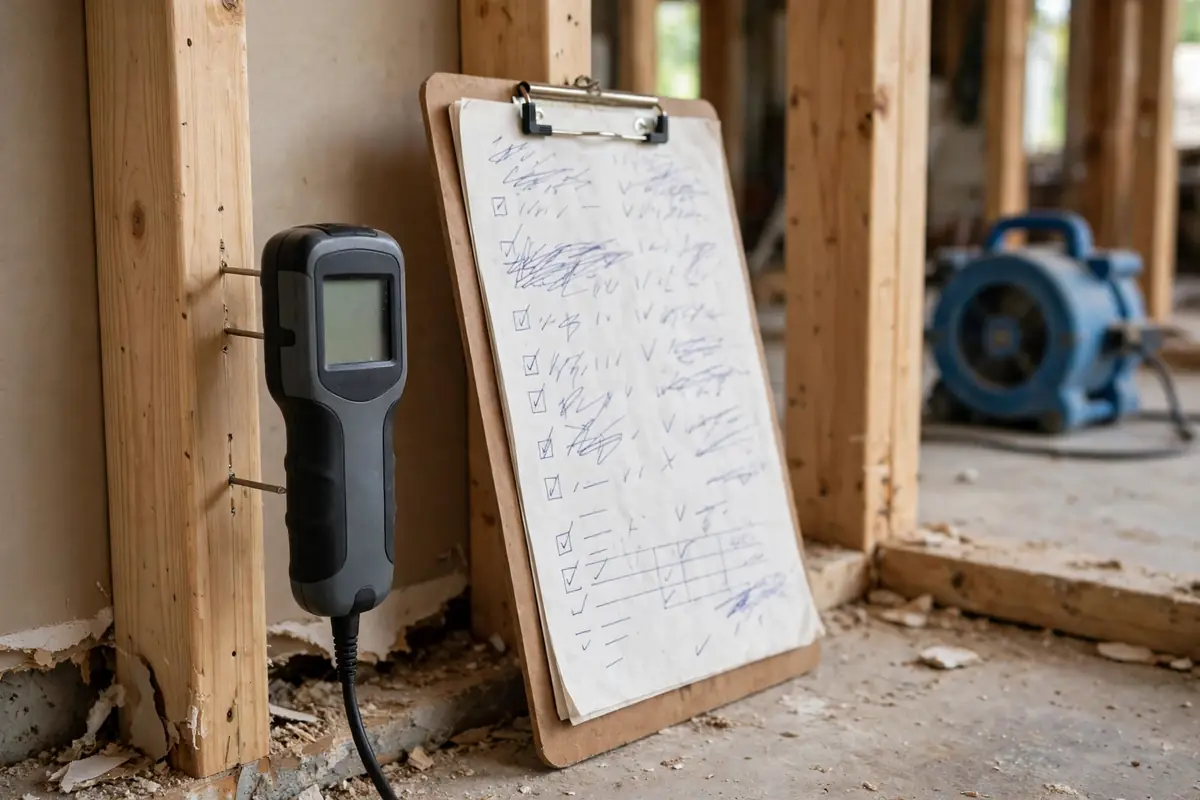
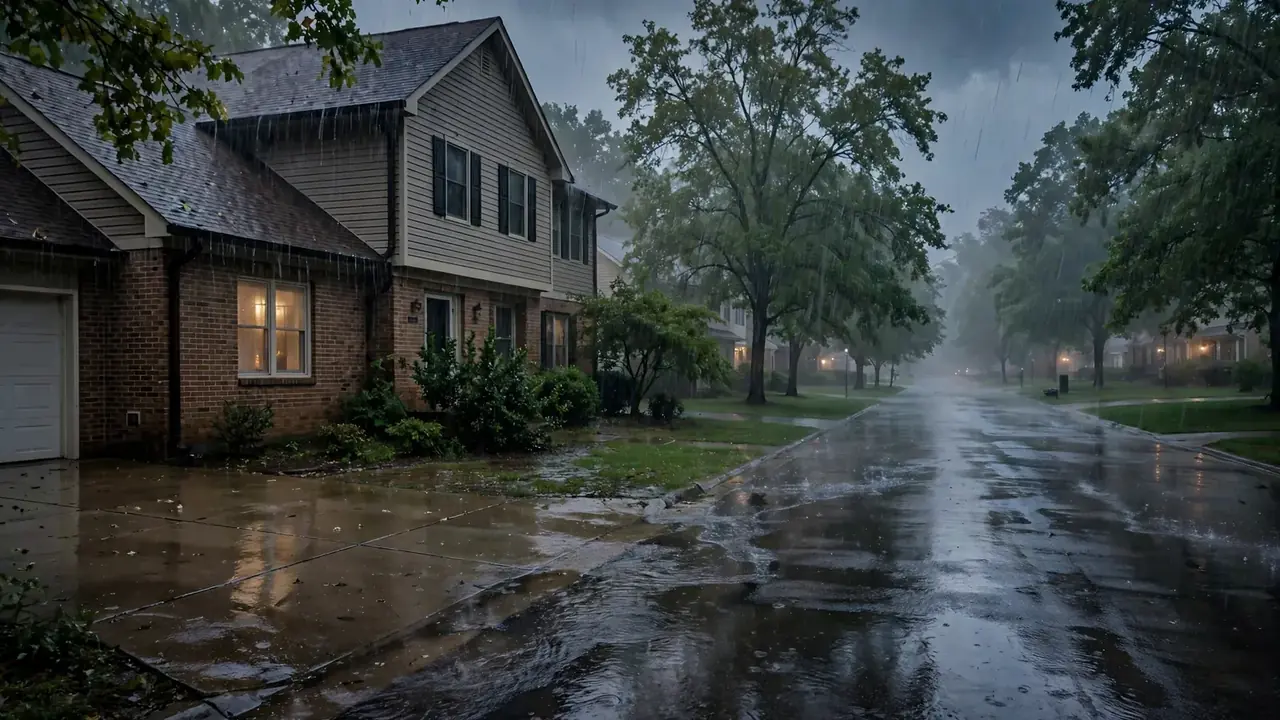
How long does it take to dry out walls in a Chesterfield home after a leak?
Usually three to five days with professional equipment. Hardwood, plaster, concrete and framing soaked for more than a day can take a week or longer. Moisture readings decide the end point.
Without equipment, walls here can stay wet for weeks, particularly in summer when outdoor air is as humid as the room you are trying to dry.
What structural drying means
Building materials absorb water like a sponge. Drywall, wood studs, subfloor, concrete and insulation hold it long after the carpet feels dry. Structural drying removes that bound water by controlling three things: airflow across wet surfaces, low humidity in the room, and temperature. Get those right and water moves out of the materials and into the air, where the dehumidifier collects it.
The equipment
Air movers
Low, high-speed fans that push air along walls and floors to lift moisture off surfaces.
LGR dehumidifiers
Low-grain refrigerant units that keep pulling water from the air even when humidity is already low, which household dehumidifiers cannot do.
Wall and cavity drying systems
Small hoses feed dry air through holes behind the baseboard into wall cavities, under cabinets and into ceilings.
Floor mats
Sealed panels that draw moisture up through hardwood. See Hardwood Floor Water Damage.
Moisture meters and thermal cameras
Pin and pinless meters measure moisture in materials. Thermal imaging shows wet areas as cooler patches.
Moisture mapping
On day one we mark every wet area on a sketch of the affected rooms and record a reading at each point. We also take a reading from a dry part of the house as the target, called the dry standard. Each day the same points are re-measured. You can see the numbers drop, and so can your adjuster.
Why daily checks matter
Equipment is adjusted as the job progresses. Air movers are repositioned, a dehumidifier is added or removed, and a wall that is not responding is opened. Leaving machines untouched for a week wastes time and electricity, and can leave a wet pocket behind.
What we open and what we leave
Baseboards usually come off. Wet pad comes out. Drywall stays if it is drying and sound. Insulation that is soaked is removed. The aim is to save as much as can be dried properly, because every material saved is one that does not have to be rebuilt.
Living with the equipment
It is loud, about like a row of box fans on high, and it warms the room. Keep doors and windows in the drying area closed so the dehumidifiers are not trying to dry the outdoors. Leave the machines running around the clock. The electricity used over a typical job is modest compared with the cost of the repairs it prevents.
When drying is not enough
Materials contaminated by sewage or floodwater are removed, not dried. Mold that has already formed needs remediation. See Mold Remediation. Standing water has to be extracted first. See Emergency Water Extraction.
Cost and insurance
Drying is priced by the equipment needed and the number of days. A single room is typically in the hundreds to low thousands of dollars. Several rooms or a full lower level cost more. When the water loss is covered, drying is part of the claim, and the daily log supports it. Once dry, repairs are covered on Water Damaged Drywall Repair.
Drying questions
Please do not. Drying slows sharply and the job takes longer.
Often, through small holes hidden behind the baseboard.
A record of where the building is wet and how those readings change each day.
Concrete dries slowly. The surface is usually ready for flooring in about a week, confirmed by testing.
Not in humid weather. It brings moisture in.
Map of Chesterfield, Missouri
Still wet?
Call (636) 228-0038 for structural drying in Chesterfield, MO. The crew is dispatched immediately. Our water damage drying service in Chesterfield, MO and dehumidification service in Chesterfield, MO are monitored daily, and both the water damage drying service in Chesterfield, MO and the dehumidification service in Chesterfield, MO end only when the readings say dry.
(636) 228-0038